
Start with the basics
A great introduction to microgreens
Meet microgreens, explore different varieties, and discover how they grow and fit into everyday meals.
Explore what microgreens are, find a guide for your first crop, and get answers to common growing questions.
Meet microgreens, explore different varieties, and discover how they grow and fit into everyday meals.
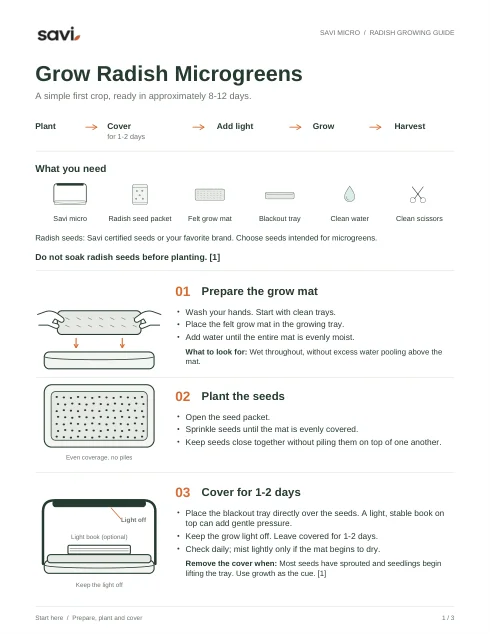
Follow the illustrated steps from planting to harvest, with daily care and troubleshooting along the way.
No. Sprouts are harvested earlier and usually eaten with the seed and root attached. Microgreens develop further and are cut above the growing surface, leaving the roots behind. [1]
Many are familiar vegetables and herbs harvested young. Choose seeds intended for edible microgreen production and a variety known to be suitable.
No. Suitable growing mats, coconut coir, and other media can support their roots and hold moisture. The appropriate medium depends on the crop and system.
Stored reserves support early growth. As leaves develop, light powers photosynthesis, allowing the plant to make sugars for continued growth. [3]
Yes, with suitable light, temperature, moisture, and airflow. A grow light can help when natural daylight is insufficient.
Many varieties take approximately 7–21 days from sowing to harvest. Some take longer, and timing changes with the variety and growing conditions. [1]
Radish, broccoli, and kale are useful starting choices because they grow quickly and generally require no soaking. Peas and sunflower involve more preparation.
No. Flavours range from mild and sweet to spicy and peppery. Textures also vary, from delicate leaves to thicker, crunchy shoots.
No. Some plants have edible fruits but unsuitable stems and leaves. Tomatoes, peppers, and eggplants should not be grown as edible microgreens because their foliage contains potentially harmful compounds. Choose established edible varieties. [5]
Early harvesting provides their characteristic tender stems, small leaves, and flavour. The preferred stage varies between crops.
With suitable conditions, they develop more leaves and larger roots. Growing them to maturity usually requires more space and different ongoing care than a microgreen tray provides.
They add flavour, colour, texture, and nutrients to meals. Enjoy them alongside other vegetables and foods rather than treating them as a replacement.